







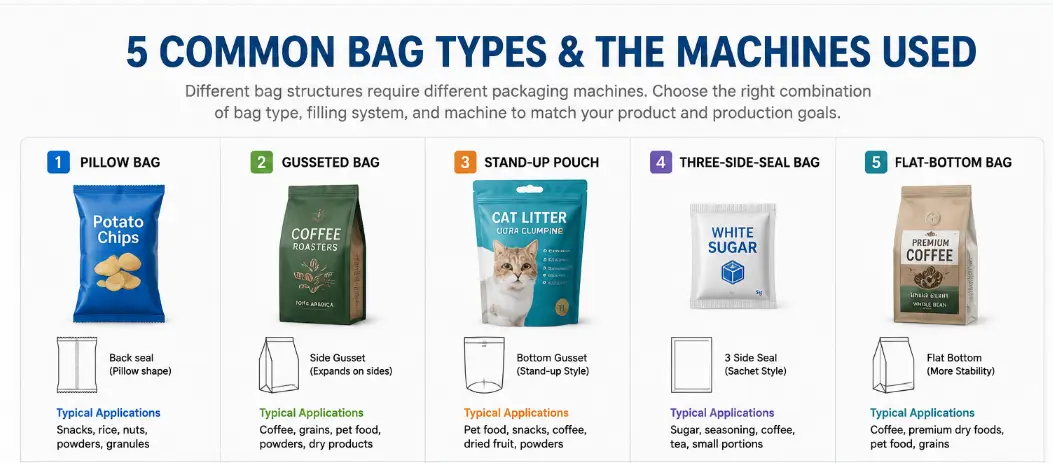
Choosing a packaging machine involves more than deciding how many bags you need to produce per minute. The type of bag you want to make or fill is one of the first things to consider.
A pillow bag made from roll film, for example, is handled differently from a premade stand-up pouch with a zipper. Even when two bags look similar, their construction and opening method may require different packaging equipment.
For food manufacturers, coffee producers, snack brands, and pet food businesses, understanding these differences can make it easier to compare machines, prepare technical requirements, and avoid choosing equipment that cannot produce the intended package.
This guide explains five common flexible packaging formats, how they relate to packaging machinery, and what you should confirm before requesting a quotation.
1. First, Understand the Two Main Packaging Methods
Before comparing individual bag styles, it helps to understand one basic difference: some machines make bags from a roll of film, while others fill and seal bags that have already been manufactured.
Method A: Form-Fill-Seal Packaging
A form-fill-seal machine forms, fills, and seals packages in one integrated process. In a typical vertical form-fill-seal (VFFS) machine, flexible packaging film is unwound from a roll, shaped into a tube, and sealed vertically to form the bag. The product is then dispensed into the bag, followed by horizontal sealing and cutting to create individual packages.
According to PMMI ProSource’s guide to vertical form-fill-seal packaging, VFFS machines are used for a wide range of products, including powders, granules, grains, and other bulk materials.
This method is commonly used to package rice, cereals, snacks, coffee, and powdered products. The appropriate filling system and bag format depend on the product characteristics, target package weight, and packaging requirements.
Method B: Premade Pouch Packaging
A premade pouch machine handles bags that have already been manufactured. The machine opens each bag, fills it with the product, and seals it.
This approach is often considered for stand-up pouches, zipper pouches, and other finished bag formats, provided their dimensions and construction are compatible with the machine.
The key question is not simply which bag looks better. It is whether you need the machine to make the bag from film or to fill a finished bag.
2. Five Common Bag Types and the Machines Used to Package Them
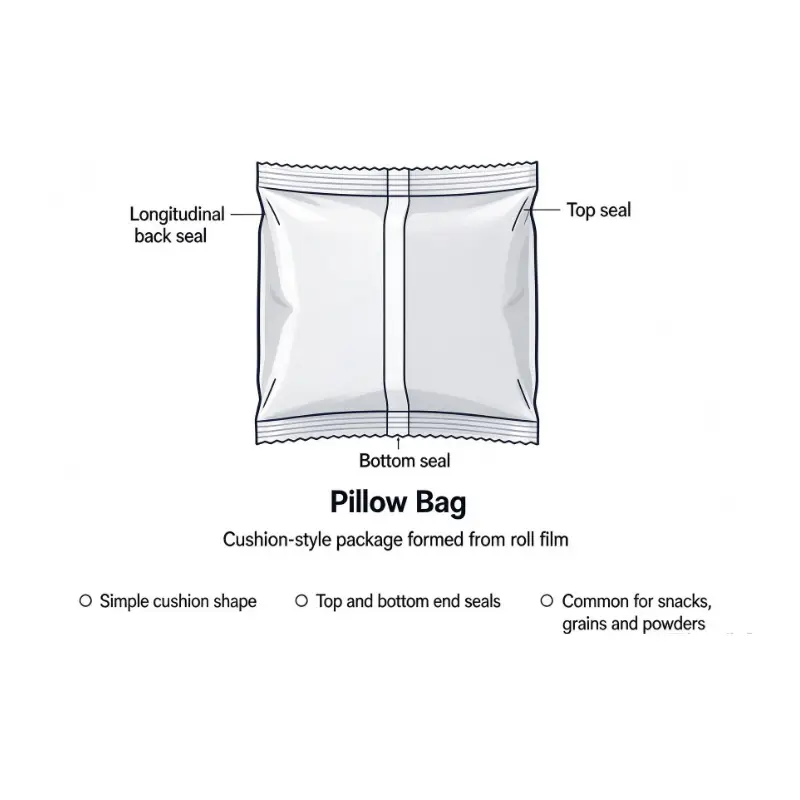
2.1 Pillow Bags: A Common Format for Roll-Film Packaging
A pillow bag usually has a longitudinal back seal and seals across the top and bottom. When filled, it has a simple cushion-like shape.
It is commonly used for snacks, grains, powdered products, and many everyday food products.
A typical VFFS machine can form pillow bags directly from roll film. Depending on the product, the machine may work with a multihead weigher, linear weigher, auger filler, or another suitable dosing device.
Before selecting the machine, confirm:
- The required bag width and length
- The product weight per bag
- The film material and sealing requirements
- The required production output
- Whether the product is a powder, granule, or solid piece
For example, a machine packaging rice may use a weighing system, while a machine packaging fine milk powder may use an auger filling system. The correct configuration depends on the product and the required filling performance.
2.2 Gusseted Bags: When the Package Needs Additional Space
Gusseted bags contain folded sections that expand when the bag is filled. Depending on the design, these folds may be located at the sides or bottom.
They are used for certain coffee, grain, powder, and other dry-product applications.
A gusseted bag is not a single, universal bag design. Different gusset structures may require different forming arrangements.
When purchasing a machine, provide a drawing or sample of the intended bag. Ask the supplier to confirm whether the machine can produce the exact gusset structure, rather than assuming that all VFFS machines support every gusseted format.

2.3 Stand-Up Pouches: For Products That Need Upright Display
A stand-up pouch is designed with a bottom structure that allows it to stand upright when filled. Some versions include a zipper, tear notch, or other opening feature.
These bags are common in retail packaging for snacks, dried fruit, pet treats, coffee, and some powdered products.
There are different ways to produce and fill stand-up pouches. Some are supplied as premade bags for a pouch filling machine; other specific formats can be produced on equipment designed for that construction.
Before purchasing, check:
- Whether the pouch is supplied ready-made or formed from roll film
- The bag width, height, and bottom gusset
- Whether a zipper or another closure is required
- How the bag opens during filling
- Whether the product can be filled without contaminating the sealing area
A zipper pouch is not automatically suitable for every premade pouch machine. Bag dimensions, zipper position, material stiffness, and opening characteristics all matter.

2.4 Three-Side-Seal Bags: For Sachets and Smaller Portions
A three-side-seal bag is sealed along three edges, leaving an opening for filling before the final seal is made.
It is commonly considered for single-use products such as seasoning powder, coffee portions, and other small sachets.
For these applications, buyers should confirm the intended sachet dimensions, fill weight, number of lanes if applicable, and required output.
The filling system also matters. Fine powders may require a different dosing method from free-flowing granules.
Do not assume that a standard VFFS pillow-bag machine can produce a three-side-seal sachet. The bag-making process and equipment design need to match the required format.
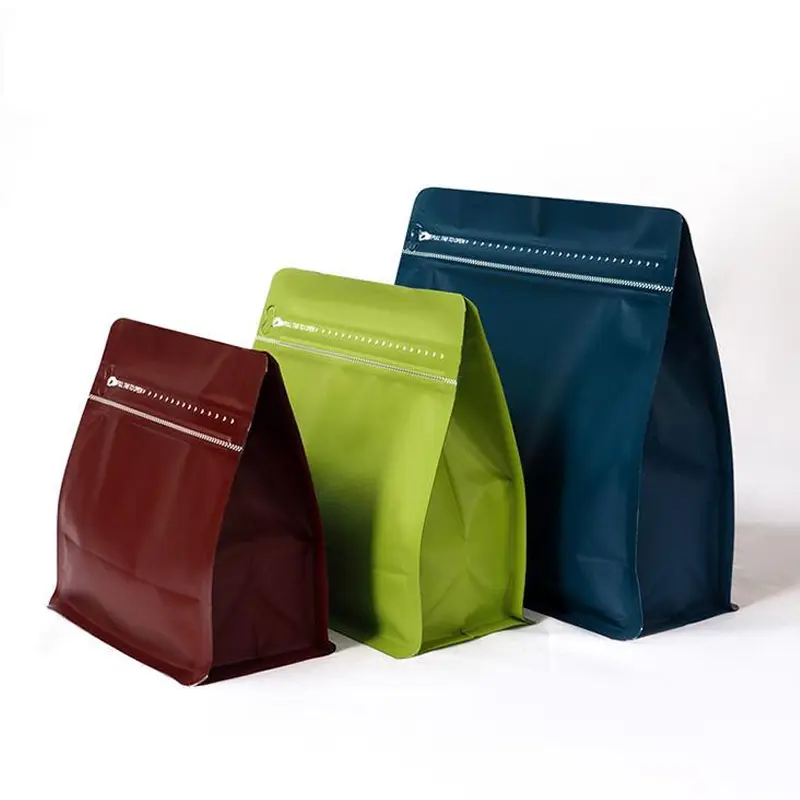
2.5 Flat-Bottom Bags: For a More Structured Package
Flat-bottom bags have a base that provides a more box-like shape when filled. They are used in some coffee, premium dry-food, and pet food applications.
Their structure can offer a different shelf appearance from a conventional pillow bag, but the machine requirements depend on the exact construction.
Some flat-bottom formats are filled on premade pouch machines. Other specialized equipment may support particular block-bottom or related designs.
If you want this bag type, provide a sample or technical drawing and ask which machine configuration is required. Also confirm whether the machine can handle any additional features, such as a zipper or degassing valve.
3. Bag Type and Packaging Machine: A Quick Comparison
The table below is a starting point for comparing common formats. It is not a guarantee that every machine can handle every bag type.
| Tipo de bolsa | Typical packaging method | Example applications | Main point to confirm |
|---|---|---|---|
| Bolsa tipo almohada | VFFS or another suitable form-fill-seal machine | Rice, snacks, powders | Film width, bag length, filling method |
| Gusseted bag | VFFS or specialized equipment, depending on construction | Coffee, grains, dry products | Exact gusset design and forming capability |
| Bolsa vertical | Often premade pouch equipment; some formats use other specialized systems | Pet treats, snacks, coffee | Bottom structure, zipper, pouch opening |
| Three-side-seal sachet | Equipment designed for three-side-seal packaging | Seasonings, sample packs, small portions | Sachet dimensions, filling dose, sealing layout |
| Flat-bottom bag | Often premade pouch equipment or specialized bag-forming equipment | Coffee, premium dry products | Bottom construction, corner seals, extra features |
Important: Bag appearance alone is not enough to determine machine compatibility. Two bags that look similar may have different seals, gussets, materials, or opening characteristics.
4. The Product Also Determines the Filling System
Once you have identified a suitable bag format, the next step is to match the filling system to the product.
The bag and the filling system must work together. A machine that handles a particular bag well may still need a different dosing device for a different product.
| Características del producto | Filling method to consider | Qué hay que comprobar |
|---|---|---|
| Fine powder, such as milk powder or spices | Llenadora de tornillo sinfín | Powder flow, dust, target weight |
| Free-flowing granules, such as rice | Weigher or suitable volumetric system | Grain size, target weight, accuracy |
| Mixed snacks or irregular pieces | Multihead weigher or another suitable weighing system | Product size, fragility, mix consistency |
| Liquid or paste | Suitable liquid or paste filling system | Viscosity, dripping, product temperature where relevant |
| Sticky or fragile pieces | Application-specific feeding and dosing equipment | Product damage, sticking, feeding consistency |
These are general starting points, not fixed rules. The appropriate system depends on the actual product and the required performance.
For example, two powders may behave very differently during filling. A fine, dusty powder may need different handling from a free-flowing granular powder. Sharing a product photo or sample with the machine supplier can help clarify these requirements.
5. A Simple Checklist Before Requesting a Quotation
Use this checklist to prepare the information a packaging machinery supplier will need.
| Información | What to provide |
|---|---|
| Producto | Name, photos, and sample if needed |
| Tipo de bolsa | Pillow, gusseted, stand-up pouch, sachet, or another format |
| Dimensiones de la bolsa | Width, height, length, and gusset dimensions where applicable |
| Peso del relleno | Target net weight per bag |
| Velocidad de producción | Required bags per minute or per hour |
| Material de embalaje | Film or premade bag specifications, if available |
| Special features | Zipper, date coding, gas flushing, valve, or other requirements |
| Destination market | Country or region where the product will be sold |
The more clearly you define these requirements, the easier it is to evaluate whether a proposed machine fits your application.
You do not need to know every technical detail before contacting a supplier. If you have a product sample, a photo of the bag you want, the target weight, and the required output, you already have a useful starting point.
Conclusion: Choose the Bag and the Machine Together
Selecting a packaging machine is easier when you start with the package you want to produce.
Pillow bags, gusseted bags, stand-up pouches, three-side-seal sachets, and flat-bottom bags each have different structures and equipment requirements. The right choice depends on the product, target weight, bag dimensions, packaging material, and production needs.
Before purchasing, confirm that the proposed machine can make or handle your exact bag format and fill your product under the required operating conditions.
Planning a new packaging project? FRONTECH can review your product, target pack weight, bag dimensions, and production requirements to help identify a suitable packaging machine. Share a product photo and a sample or drawing of your preferred bag to get started.
Five Questions to Ask Before Buying a Packaging Machine
Provide a photo, sample, or technical drawing. Confirm the bag structure, dimensions, seals, gussets, and any zipper or valve.
Question 2: What product will the machine package?
Question 3: What is the target weight per bag?
Question 4: What production speed do I need?
State the required number of bags per minute or per hour. Ask the supplier to confirm the expected speed for your specific product, bag dimensions, filling weight, and machine configuration.
A speed figure without these conditions may not accurately represent the output you can achieve in production.
Question 5: What packaging material will I use?
If you already have film or premade bags, provide the available specifications. If the material has not been selected, explain the product's storage requirements and target market.
For food packaging, the material must be suitable for its intended use and comply with the applicable regulations. The U.S. Food and Drug Administration's food packaging guidance explains the role of food-contact substances and their safety requirements in the United States.If you are selling in other markets, check the relevant local requirements as well.
Referencias
-PMMI ProSource. “Vertical Form/Fill/Seal 101: Key Considerations.” prosource.org
-U.S. Food and Drug Administration. “Food Packaging & Other Substances that Come in Contact with Food.” fda.gov