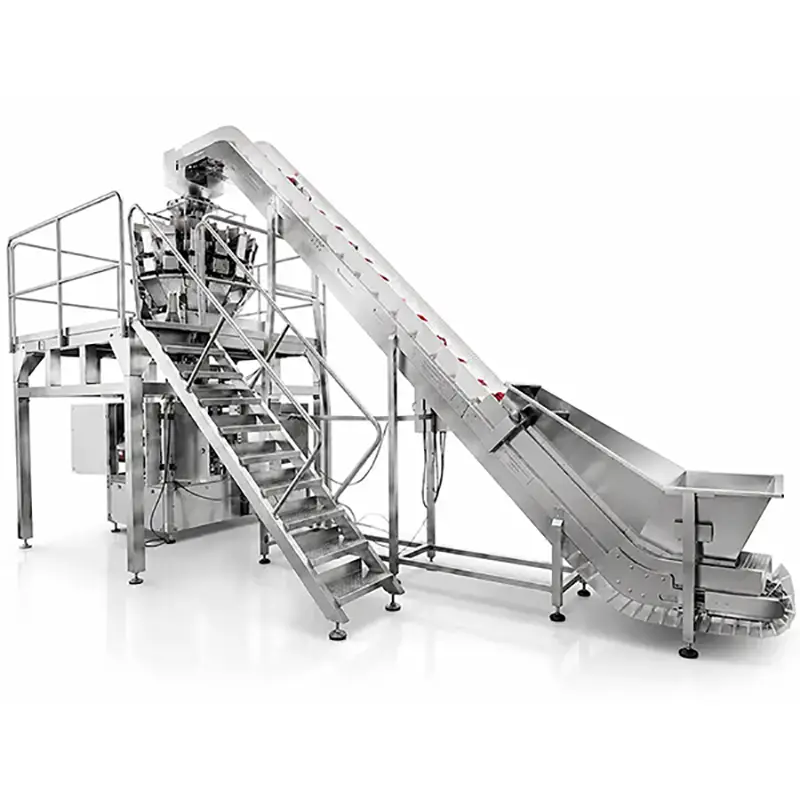
Has comprado una máquina de envasado automática para acelerar la producción. Pero, tras utilizarla durante un tiempo, te das cuenta de algo frustrante: la máquina no está produciendo tantas bolsas como esperabas.
Quizá se pare constantemente. Quizá el proceso de pesaje tarde demasiado. O quizá la máquina funcione sin problemas, pero el rendimiento final siga siendo inferior a tu objetivo de producción.
¿Te suena?
La verdad es que la velocidad de una máquina de envasado no depende únicamente de la propia máquina. La alimentación del producto, el pesaje, el sellado, los materiales de envasado e incluso las pequeñas paradas pueden influir en el número de bolsas terminadas que se producen al día.
La buena noticia es que muchos de estos problemas pueden solucionarse una vez que se descubre la causa real.
Veamos siete motivos habituales por los que tu máquina de envasado puede estar funcionando con lentitud y qué puedes hacer al respecto.
1. La velocidad anunciada de la máquina no es su rendimiento real
A la hora de comprar una máquina de envasado, es lógico que los compradores quieran saber cuántas bolsas puede producir por minuto.
Pero hay algo importante que hay que tener en cuenta: la velocidad anunciada no siempre es la que obtendrás en tu casa.
Por ejemplo, una máquina puede funcionar rápidamente al envasar productos pequeños y fáciles de manipular. Sin embargo, esa misma máquina puede funcionar más lentamente al envasar porciones grandes, polvos pegajosos o productos de forma irregular.
El tamaño de la bolsa, el peso objetivo, el tipo de película y los requisitos de sellado también pueden influir en la velocidad de producción.
Por lo tanto, antes de dar por hecho que tu máquina es demasiado lenta, comprueba en qué condiciones se midió su velocidad nominal.
Pregunta a tu proveedor:
¿Qué producto se utilizó durante la prueba de velocidad?
¿Cuál era el peso del paquete y el tamaño de la bolsa?
¿Estaba la máquina funcionando sin parar?
¿La velocidad indicada se refiere a las bolsas terminadas o a los ciclos de la máquina?
¿Puede la máquina mantener esta velocidad y seguir produciendo envases de buena calidad?
Estas preguntas te ayudan a comprender qué es lo que la máquina puede lograr de forma realista.
La velocidad real de envasado depende del producto, del tamaño del envase y de las condiciones de funcionamiento.
2. El producto no se introduce en la máquina con la rapidez suficiente
A veces, la máquina de envasado está lista para funcionar, pero el producto no.
Esta es una de las causas más habituales de la lentitud en la producción.
Imagina una máquina que envasa frutos secos. El sistema de pesaje necesita una cantidad suficiente de producto para preparar la siguiente ración. Si los frutos secos no fluyen con fluidez hacia el sistema de pesaje, la máquina tiene que esperar.
Lo mismo puede ocurrir al envasar polvo, arroz, dulces, aperitivos o alimentos congelados.
Los polvos pueden fluir de forma irregular. Algunos productos pueden apelmazarse. Otros productos pueden requerir equipos de alimentación especiales para mantener la estabilidad del proceso.
Aunque la máquina de envasado en sí sea rápida, una alimentación deficiente del producto puede ralentizar toda la línea.
¿Qué puedes hacer?
En primer lugar, observa el proceso de alimentación del producto mientras la máquina está en marcha.
¿El producto fluye de forma continua? ¿Se vacía la tolva? ¿El operario tiene que ajustar el sistema de alimentación con frecuencia?
Si detectas estos problemas, revisa el equipo de alimentación y asegúrate de que sea adecuado para tu producto.
Por ejemplo, las pesadoras multicabezal se utilizan habitualmente para productos como frutos secos, dulces, aperitivos y determinados alimentos congelados. Los productos en polvo suelen requerir una solución diferente, como una llenadora de tornillo sinfín.
Elegir el sistema de alimentación y dosificación adecuado puede marcar una gran diferencia en la eficiencia de la producción.

Una alimentación constante del producto contribuye a que la máquina de envasado funcione con mayor fluidez.
3. Pesar y envasar lleva demasiado tiempo
Otra posible razón es que la máquina tarda demasiado en preparar cada ración de producto.
Antes de poder llenar una bolsa, la máquina debe medir o dosificar la cantidad correcta. Si este paso lleva demasiado tiempo, el proceso de envasado tiene que esperar.
Por ejemplo, al envasar aperitivos con una pesadora multicabezal, la máquina debe encontrar una combinación adecuada de productos para alcanzar el peso deseado.
Al envasar polvo con una llenadora de tornillo sinfín, los parámetros de llenado deben adaptarse a las características del polvo y a la cantidad requerida.
Los paquetes muy pesados también pueden requerir más tiempo de llenado.
¿Cómo se puede mejorar?
Comprueba si la máquina está a la espera del sistema de pesaje o de llenado antes de pasar al siguiente paso.
Si es así, pide a tu proveedor que compruebe si el sistema de dosificación es adecuado para tu producto y el rendimiento deseado.
También es importante disponer de información precisa sobre el producto antes de elegir una máquina. Un sistema diseñado para bolsas pequeñas de aperitivos puede que no sea la mejor opción para envases grandes de arroz o harina.
El objetivo es encontrar un sistema que concilie la velocidad de llenado, la precisión en el peso y la calidad del envase.
4. El film de embalaje está causando problemas
El film de embalaje también puede influir en la velocidad de producción.
En una máquina VFFS vertical, el film debe desplazarse con fluidez a lo largo de la máquina, formar la bolsa correctamente y sellarse adecuadamente.
Si el film se arruga, se desplaza o no sella bien, es posible que el operario tenga que detener la máquina y realizar los ajustes necesarios.
Premade pouch machines can also experience problems when the bags are difficult to open, vary in size, or are not suitable for the machine.
Sometimes, the machine works well with one roll of film but starts having problems after the material is changed.
¿Qué puedes hacer?
Check whether the packaging material matches the machine's requirements.
For roll film, confirm the film width, thickness, roll dimensions, and sealing properties. For premade pouches, check the bag size, opening performance, and sealing area.
If the problem started after changing the packaging material, compare the new material with the previous one.
It is always a good idea to test the actual film or bags before ordering large quantities. This can help you avoid unnecessary downtime and material waste.
Smooth film feeding and stable sealing help maintain production speed.
5. The Machine Needs to Slow Down to Make a Good Seal
Fast production is important, but good packaging quality matters just as much.
If the machine runs too quickly for the selected film and sealing settings, the bags may not seal properly.
You might notice weak seals, wrinkles, damaged film, or bags that open easily after packaging.
When this happens, the operator may need to reduce the machine speed to achieve better sealing results.
This does not necessarily mean the machine is faulty. The film, sealing settings, and production speed may simply need to be checked together.
What should you check?
Start by inspecting the finished bags.
Are the seals strong and clean? Does the film look damaged? Do problems appear only when the machine runs faster?
Then review the sealing temperature, pressure, and time according to the machine manufacturer's instructions and the film supplier's recommendations.
If the machine can only produce acceptable bags at a much lower speed than expected, contact your supplier for further testing.
Remember, producing more bags is only useful when those bags meet your quality requirements.
6. Small Stops Are Adding Up
Your machine may not have one major problem. Instead, it may be stopping for a few seconds many times throughout the day.
For example, the operator may need to adjust the film, clear a product jam, refill a hopper, or correct a bag position.
Each stop seems small, but together they can reduce total output significantly.
Let's look at a simple example.
Imagine that your machine could produce 40 bags per minute under the agreed operating conditions. However, frequent stops and adjustments mean it only produces 30 bags per minute on average over the production period.
That difference can become substantial over a full shift.
How can you reduce these stops?
Start by keeping a simple record of when the machine stops and why.
You do not need complicated software. A notebook or spreadsheet can be enough.
Registro:
When the machine stopped.
How long it was stopped.
What caused the problem.
What the operator did to fix it.
After a few shifts, you may find that the same problem keeps happening.
Perhaps the film needs frequent adjustment. Perhaps the product does not feed smoothly. Or perhaps the machine needs routine maintenance.
Fixing the most common problem first is often a practical way to improve output.
Tracking machine stops helps identify problems that reduce daily output.
7. Changing Products or Bag Sizes Takes Too Long
If your factory packs several products, you may need to change the machine settings regularly.
For example, you might pack 100 g candy bags in the morning and switch to 500 g snack bags in the afternoon.
Depending on the machine, this change may involve adjusting the filling system, bag size, film settings, or other components. Cleaning may also be required when switching between certain products.
The machine may run quickly once everything is set up, but frequent changeovers can reduce total production for the day.
How can you make changeovers easier?
Prepare the next product, packaging materials, and required tools before stopping the machine.
Keep clear setup instructions for each product. If the machine supports saved recipes or preset settings, use them to reduce repeated manual adjustments.
When buying a new machine, ask how easy it is to change the package size, target weight, or product.
If you frequently switch between products, a machine that is easy to adjust may be more useful than one that offers a higher maximum speed but takes much longer to set up.
A Quick Checklist: Why Is Your Packaging Machine Slow?
| What you notice | Qué hay que comprobar |
|---|
| The machine keeps waiting for product | Feeding system and product flow |
| Weighing takes too long | Weighing settings and product characteristics |
| The machine slows down with new film | Film compatibility and feeding |
| Bags do not seal well at higher speeds | Sealing settings and packaging material |
| The machine stops frequently | Jams, adjustments, and maintenance |
| Production drops after changing products | Setup time and changeover procedures |
| The machine runs smoothly but output is still low | Actual production speed and the agreed test conditions |
These checks can help you identify where to start. If several problems happen at the same time, ask your machine supplier to evaluate the complete packaging process.
How to Know Whether Your Machine Is Producing Enough
Instead of looking only at the speed displayed on the control panel, count how many good packages the machine actually produces over a set period.
For example, if the machine produces 1,800 acceptable bags in 60 minutes, its average output is 30 bags per minute.
You can calculate it like this:
Average output = Acceptable bags produced ÷ Production time in minutes
Count only packages that meet your quality requirements. Record any stops and adjustments during the test so you can understand why the actual output may be lower than the expected speed.
For a fair comparison, use the same product, package size, target weight, and testing conditions.
This simple method can help you and your supplier identify whether the main issue is the machine speed, product feeding, filling time, or frequent downtime.
Preguntas frecuentes
Why is my packaging machine slower than the advertised speed?
The advertised speed may be based on specific test conditions. Product characteristics, package weight, bag size, filling time, sealing requirements, and machine stops can all affect actual output.
Will increasing the machine speed solve the problem?
Not always. Higher speed may cause filling delays, poor seals, or more frequent stops if the complete process cannot support it. First identify the bottleneck, then adjust the machine according to the manufacturer's recommendations.
Can regular maintenance improve production speed?
Regular maintenance can help prevent avoidable stops caused by worn components, buildup, or mechanical problems. It is an important part of keeping the machine running reliably.
What information should I provide when asking for a packaging machine quotation?
Provide your product name, target package weight, bag style, packaging material, and required output. If possible, share a product sample and photos of the intended package. This helps the supplier recommend a more suitable machine.
Reflexiones finales
If your packaging machine is running slower than expected, the problem may not be the machine itself.
Sometimes, the product does not feed smoothly. Sometimes, weighing takes too long, the packaging film causes trouble, or frequent small stops reduce the total output.
The best approach is to observe the complete process, identify the biggest bottleneck, and solve that problem first.
Looking for a packaging machine that matches your production target? Contact FRONTECH with your product details, target weight, bag style, and required output. Our team can help you evaluate the right packaging solution for your application.
Referencias
PMMI. “Packaging and Predictive Maintenance.” pmmi.org
PMMI. “2024 Contract Packaging and Manufacturing: Drivers of Machinery Investments.” pmmi.org