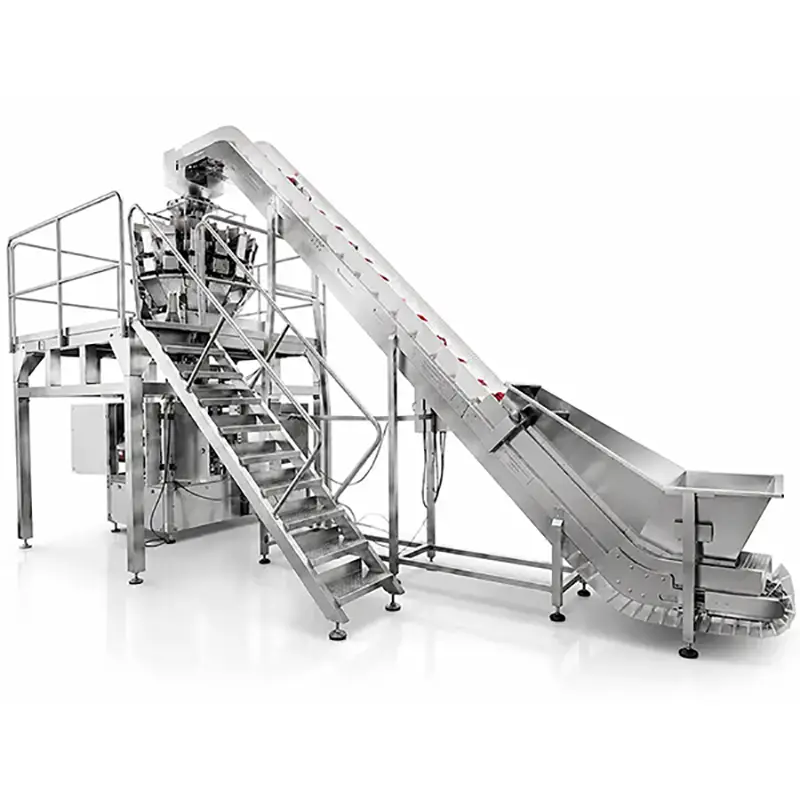
You bought an automatic packaging machine to speed up production. But after running it for a while, you notice something frustrating: the machine is not producing as many bags as you expected.
Maybe it keeps stopping. Maybe the weighing process takes too long. Or perhaps the machine runs smoothly, but the final output is still lower than your production target.
Sound familiar?
The truth is, a packaging machine's speed depends on more than the machine itself. Product feeding, weighing, sealing, packaging materials, and even small stops can affect how many finished bags you get in a day.
The good news is that many of these problems can be improved once you find the real cause.
Let's look at seven common reasons why your packaging machine may be running slowly and what you can do about them.
1. The Machine's Advertised Speed Is Not Its Actual Output
When buying a packaging machine, buyers naturally want to know how many bags it can produce per minute.
But there is one important thing to remember: the advertised speed is not always the speed you will get in your factory.
For example, a machine may run quickly when packing small, easy-to-handle products. However, the same machine may run more slowly when packing large portions, sticky powders, or irregularly shaped products.
Bag size, target weight, film type, and sealing requirements can also affect production speed.
So, before assuming that your machine is too slow, check the conditions under which its rated speed was measured.
Ask your supplier:
What product was used during the speed test?
What was the package weight and bag size?
Was the machine running continuously?
Does the quoted speed refer to finished bags or machine cycles?
Can the machine maintain this speed while producing good-quality packages?
These questions help you understand what the machine can realistically achieve.
Actual packaging speed depends on the product, package size, and operating conditions.
2. The Product Is Not Feeding into the Machine Fast Enough
Sometimes, the packaging machine is ready to work, but the product is not.
This is a common reason for slow production.
Imagine a machine packing nuts. The weighing system needs enough product to prepare the next portion. If the nuts do not flow smoothly into the weighing system, the machine has to wait.
The same thing can happen when packing powder, rice, candy, snacks, or frozen food.
Powders may flow unevenly. Some products may stick together. Other products may need special feeding equipment to keep the process stable.
Even if the packaging machine itself is fast, poor product feeding can slow down the entire line.
What can you do?
First, watch the product feeding process while the machine is running.
Does the product flow continuously? Does the hopper run empty? Does the operator need to adjust the feeding system frequently?
If you notice these problems, check the feeding equipment and make sure it is suitable for your product.
For example, a multihead weigher is commonly used for products such as nuts, candy, snacks, and suitable frozen foods. Powders often require a different solution, such as an auger filler.
Choosing the right feeding and dosing system can make a real difference to production efficiency.

Stable product feeding helps the packaging machine run more smoothly.
3. Weighing and Filling Take Too Much Time
Another possible reason is that the machine spends too long preparing each portion of product.
Before a bag can be filled, the machine needs to measure or dose the correct amount. If this step takes too long, the packaging process has to wait.
For example, when packing snacks with a multihead weigher, the machine needs to find a suitable combination of product to reach the target weight.
When packing powder with an auger filler, the filling settings need to suit the powder's characteristics and the required quantity.
Large package weights may also require more filling time.
How can you improve it?
Check whether the machine is waiting for the weighing or filling system before moving to the next step.
If it is, ask your supplier to check whether the dosing system is suitable for your product and target output.
It is also important to provide accurate product information before choosing a machine. A system designed for small snack bags may not be the best choice for large packages of rice or flour.
The goal is to find a system that balances filling speed, weight accuracy, and package quality.
4. The Packaging Film Is Causing Problems
Packaging film can also affect production speed.
For a vertical VFFS machine, the film needs to move smoothly through the machine, form the bag correctly, and seal properly.
If the film wrinkles, slips out of position, or does not seal well, the operator may need to stop the machine and make adjustments.
Premade pouch machines can also experience problems when the bags are difficult to open, vary in size, or are not suitable for the machine.
Sometimes, the machine works well with one roll of film but starts having problems after the material is changed.
What can you do?
Check whether the packaging material matches the machine's requirements.
For roll film, confirm the film width, thickness, roll dimensions, and sealing properties. For premade pouches, check the bag size, opening performance, and sealing area.
If the problem started after changing the packaging material, compare the new material with the previous one.
It is always a good idea to test the actual film or bags before ordering large quantities. This can help you avoid unnecessary downtime and material waste.
Smooth film feeding and stable sealing help maintain production speed.
5. The Machine Needs to Slow Down to Make a Good Seal
Fast production is important, but good packaging quality matters just as much.
If the machine runs too quickly for the selected film and sealing settings, the bags may not seal properly.
You might notice weak seals, wrinkles, damaged film, or bags that open easily after packaging.
When this happens, the operator may need to reduce the machine speed to achieve better sealing results.
This does not necessarily mean the machine is faulty. The film, sealing settings, and production speed may simply need to be checked together.
What should you check?
Start by inspecting the finished bags.
Are the seals strong and clean? Does the film look damaged? Do problems appear only when the machine runs faster?
Then review the sealing temperature, pressure, and time according to the machine manufacturer's instructions and the film supplier's recommendations.
If the machine can only produce acceptable bags at a much lower speed than expected, contact your supplier for further testing.
Remember, producing more bags is only useful when those bags meet your quality requirements.
6. Small Stops Are Adding Up
Your machine may not have one major problem. Instead, it may be stopping for a few seconds many times throughout the day.
For example, the operator may need to adjust the film, clear a product jam, refill a hopper, or correct a bag position.
Each stop seems small, but together they can reduce total output significantly.
Let's look at a simple example.
Imagine that your machine could produce 40 bags per minute under the agreed operating conditions. However, frequent stops and adjustments mean it only produces 30 bags per minute on average over the production period.
That difference can become substantial over a full shift.
How can you reduce these stops?
Start by keeping a simple record of when the machine stops and why.
You do not need complicated software. A notebook or spreadsheet can be enough.
Record:
When the machine stopped.
How long it was stopped.
What caused the problem.
What the operator did to fix it.
After a few shifts, you may find that the same problem keeps happening.
Perhaps the film needs frequent adjustment. Perhaps the product does not feed smoothly. Or perhaps the machine needs routine maintenance.
Fixing the most common problem first is often a practical way to improve output.
Tracking machine stops helps identify problems that reduce daily output.
7. Changing Products or Bag Sizes Takes Too Long
If your factory packs several products, you may need to change the machine settings regularly.
For example, you might pack 100 g candy bags in the morning and switch to 500 g snack bags in the afternoon.
Depending on the machine, this change may involve adjusting the filling system, bag size, film settings, or other components. Cleaning may also be required when switching between certain products.
The machine may run quickly once everything is set up, but frequent changeovers can reduce total production for the day.
How can you make changeovers easier?
Prepare the next product, packaging materials, and required tools before stopping the machine.
Keep clear setup instructions for each product. If the machine supports saved recipes or preset settings, use them to reduce repeated manual adjustments.
When buying a new machine, ask how easy it is to change the package size, target weight, or product.
If you frequently switch between products, a machine that is easy to adjust may be more useful than one that offers a higher maximum speed but takes much longer to set up.
A Quick Checklist: Why Is Your Packaging Machine Slow?
| What you notice | What to check |
|---|
| The machine keeps waiting for product | Feeding system and product flow |
| Weighing takes too long | Weighing settings and product characteristics |
| The machine slows down with new film | Film compatibility and feeding |
| Bags do not seal well at higher speeds | Sealing settings and packaging material |
| The machine stops frequently | Jams, adjustments, and maintenance |
| Production drops after changing products | Setup time and changeover procedures |
| The machine runs smoothly but output is still low | Actual production speed and the agreed test conditions |
These checks can help you identify where to start. If several problems happen at the same time, ask your machine supplier to evaluate the complete packaging process.
How to Know Whether Your Machine Is Producing Enough
Instead of looking only at the speed displayed on the control panel, count how many good packages the machine actually produces over a set period.
For example, if the machine produces 1,800 acceptable bags in 60 minutes, its average output is 30 bags per minute.
You can calculate it like this:
Average output = Acceptable bags produced ÷ Production time in minutes
Count only packages that meet your quality requirements. Record any stops and adjustments during the test so you can understand why the actual output may be lower than the expected speed.
For a fair comparison, use the same product, package size, target weight, and testing conditions.
This simple method can help you and your supplier identify whether the main issue is the machine speed, product feeding, filling time, or frequent downtime.
Frequently Asked Questions
Why is my packaging machine slower than the advertised speed?
The advertised speed may be based on specific test conditions. Product characteristics, package weight, bag size, filling time, sealing requirements, and machine stops can all affect actual output.
Will increasing the machine speed solve the problem?
Not always. Higher speed may cause filling delays, poor seals, or more frequent stops if the complete process cannot support it. First identify the bottleneck, then adjust the machine according to the manufacturer's recommendations.
Can regular maintenance improve production speed?
Regular maintenance can help prevent avoidable stops caused by worn components, buildup, or mechanical problems. It is an important part of keeping the machine running reliably.
What information should I provide when asking for a packaging machine quotation?
Provide your product name, target package weight, bag style, packaging material, and required output. If possible, share a product sample and photos of the intended package. This helps the supplier recommend a more suitable machine.
Final Thoughts
If your packaging machine is running slower than expected, the problem may not be the machine itself.
Sometimes, the product does not feed smoothly. Sometimes, weighing takes too long, the packaging film causes trouble, or frequent small stops reduce the total output.
The best approach is to observe the complete process, identify the biggest bottleneck, and solve that problem first.
Looking for a packaging machine that matches your production target? Contact FRONTECH with your product details, target weight, bag style, and required output. Our team can help you evaluate the right packaging solution for your application.
References
PMMI. “Packaging and Predictive Maintenance.” pmmi.org
PMMI. “2024 Contract Packaging and Manufacturing: Drivers of Machinery Investments.” pmmi.org