






When choosing packaging for your product, you may have one important question: Should you use a stand-up pouch or a pillow bag?
Both are popular packaging options for food, snacks, pet treats, powders, and many other products. But they look different, work with different packaging machines, and offer different benefits.
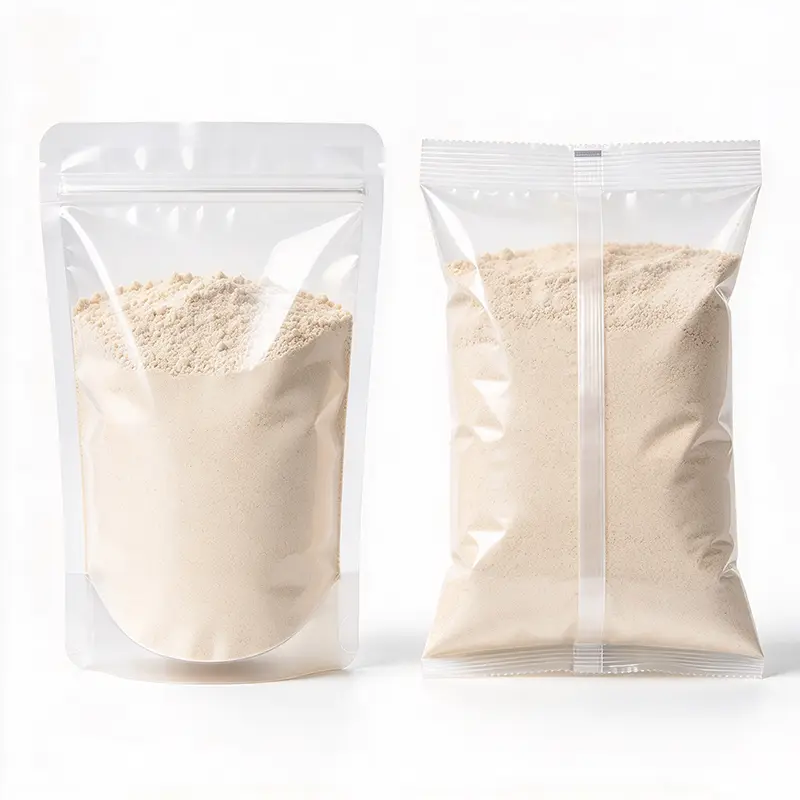
A stand-up pouch can stand upright on a shelf, making it a good choice for many retail products. A pillow bag is a simple, flexible package commonly made directly from a roll of film using an automatic packaging machine.
So, which one is right for your product? Let's take a closer look.
1. What Is a Stand-Up Pouch?
A stand-up pouch is a flexible bag designed to stand upright after it is filled. Most stand-up pouches have a special bottom gusset that opens up and supports the package.
Stand-up pouches are commonly used for:
自立袋常用于:
- Nuts and dried fruit
- Candy and snacks
- Pet food and pet treats
- Coffee and tea
- Protein powder and other food powders
- Liquid products in suitable spouted pouches
What Are the Common Types of Stand-Up Pouches?
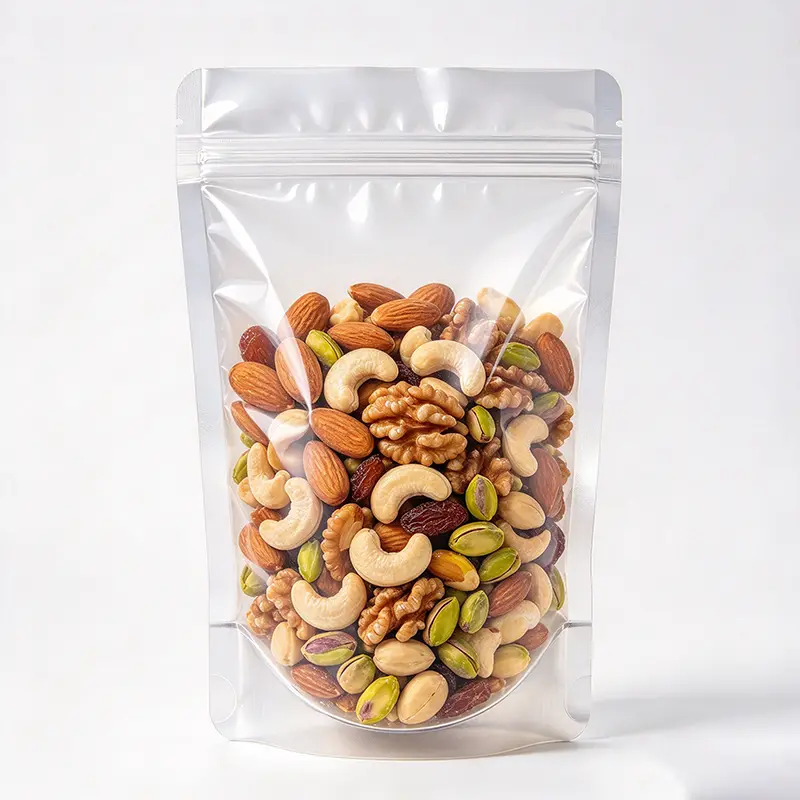
Stand-up pouch with a zipper
A zipper allows customers to open and close the bag again. It is useful for products that may not be consumed all at once, such as nuts, dried fruit, and pet treats.
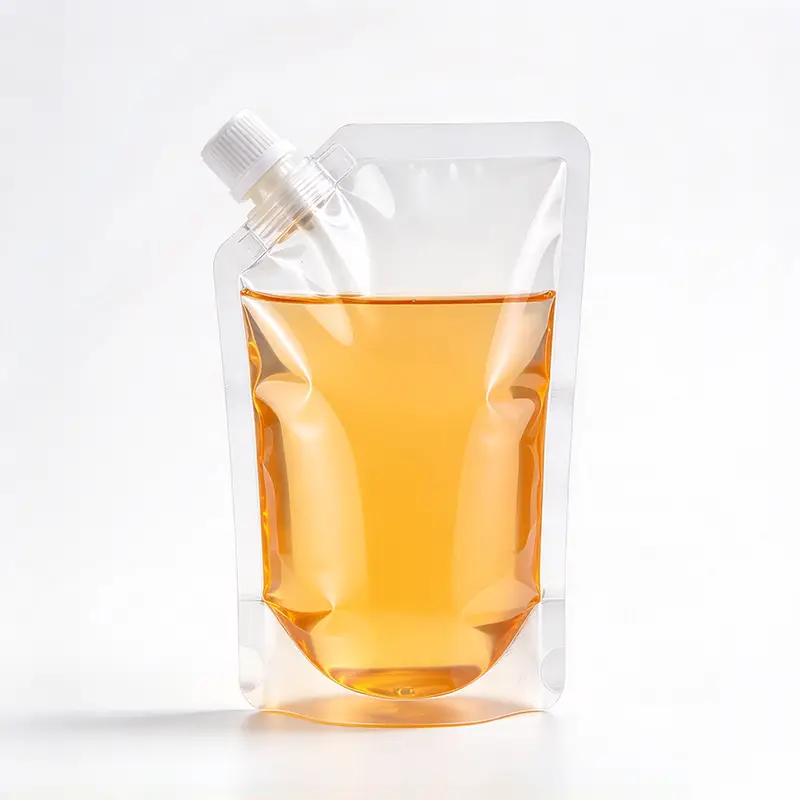
Stand-up pouch with a spout
A spout makes it easier to pour or dispense liquids. This type of pouch is often used for sauces, drinks, and other suitable liquid products.
2. What Is a Pillow Bag?
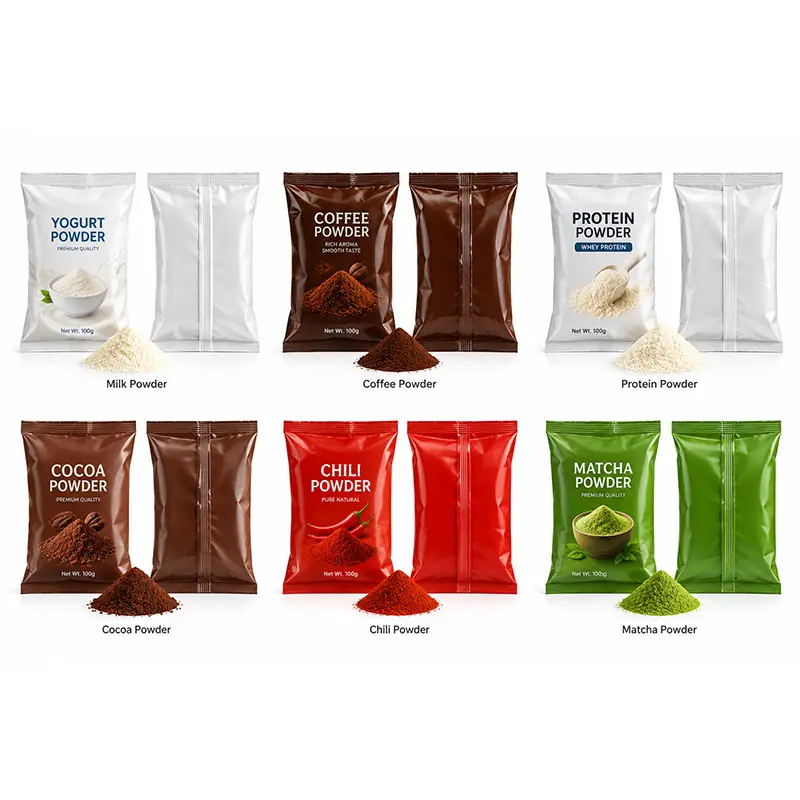
Unlike a premade stand-up pouch, a pillow bag can be formed directly from a roll of packaging film on a compatible VFFS machine.
Pillow bags are commonly used for:
- Potato chips and snacks
- Candy and confectionery
- Rice, grains, and seeds
- Frozen foods
- Powder products
- Other suitable solid and granular products
Why Do Many Manufacturers Choose Pillow Bags?
Pillow bags are a popular choice because they work well for many standard packaging applications.
- Simple package design: Suitable for a wide range of everyday products.
- Automatic production: A compatible VFFS machine can form, fill, and seal bags in one process.
- Flexible bag sizes: Bag dimensions can be adjusted within the machine's supported range.
- Different filling options: The machine can be matched with a multihead weigher, auger filler, or another suitable dosing system.
- Good for production lines: Pillow bags can be used in automated packaging operations for many products.
3. Stand-Up Pouch vs. Pillow Bag: What Is the Difference?
| Feature | Stand-Up Pouch | Pillow Bag |
|---|---|---|
| Appearance | Can stand upright | Usually lies flat or is packed into a carton |
| Package style | Often has a bottom gusset | Usually has a back seal and two end seals |
| Common machine | Premade pouch packing machine | VFFS packaging machine |
| Zipper option | Available with suitable pouch designs | Depends on the bag design and machine |
| Shelf display | Good for upright product display | Suitable for many standard retail packages |
| Typical products | Nuts, dried fruit, pet treats, coffee | Snacks, candy, rice, frozen foods |
| Packaging material | Premade pouches | Roll film |
| Best for | Products needing shelf appeal or resealing | Many standard, automatic roll-film packaging applications |
The simple answer: If you want your product to stand upright and offer features such as a zipper, a stand-up pouch may be a good choice. If you want a straightforward bag made from roll film on an automatic packaging line, a pillow bag may be more suitable.
Of course, the final choice also depends on your product, budget, packaging material, and production requirements.
4. What Size Should You Choose?
Choosing the right bag size is just as important as choosing the bag type.
A bag that is too small may not hold enough product. A bag that is too large may look less attractive or use more packaging material than necessary.
Here are some example dimensions to help you start planning.
Stand-Up Pouch Size Examples
| Pouch width | Pouch height | Possible applications |
|---|---|---|
| 100–140 mm | 150–200 mm | Small snacks, candy, samples |
| 140–180 mm | 200–260 mm | Nuts, dried fruit, small retail packs |
| 180–220 mm | 260–320 mm | Larger snacks, pet treats, selected powders |
| 220–280 mm | 300–380 mm | Larger retail packs |
Pillow Bag Size Examples
| Bag width | Bag length | Possible applications |
|---|---|---|
| 80–120 mm | 100–180 mm | Small candy packs, snacks |
| 120–180 mm | 150–250 mm | Nuts, seeds, snacks |
| 180–250 mm | 200–350 mm | Larger snacks, grains, selected frozen foods |
| 250–300 mm | 250–400 mm | Larger packages, depending on the machine |
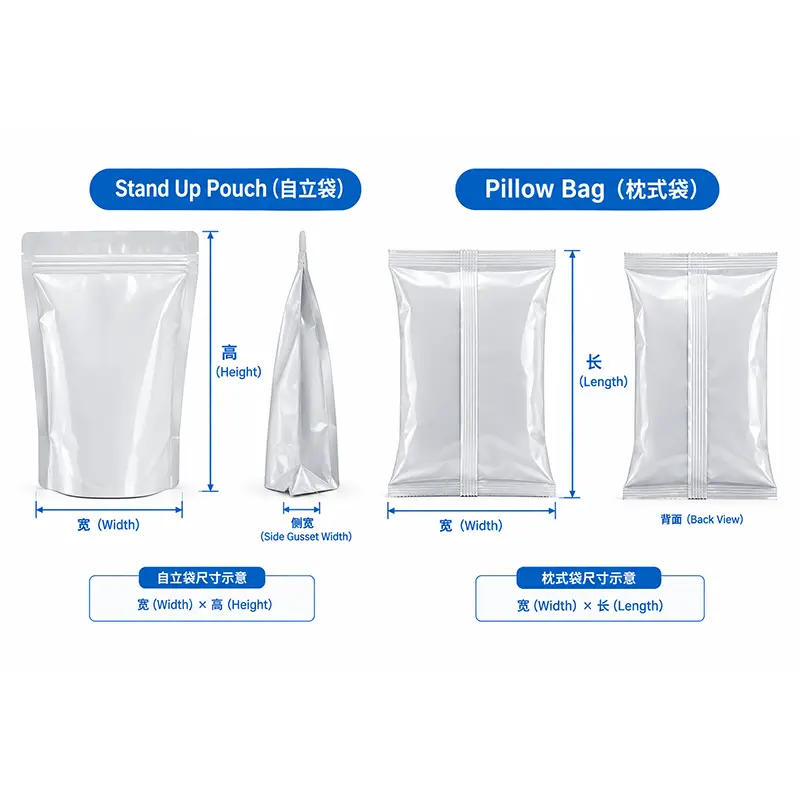
Please note: These are example dimensions, not fixed industry standards. The right size depends on the product's weight, shape, and volume, as well as the machine model.
For example, 200 g of nuts may need a different bag size from 200 g of powder. Before ordering a packaging machine, it is best to confirm your target bag dimensions and test the actual product.
5. Which Bag Is Better for Your Product?
There is no single answer for every business. Here are some common examples.
Nuts and Dried Fruit
If you want your product to look attractive on retail shelves and allow customers to reseal the bag, a stand-up zipper pouch is worth considering.
If your product is sold in a more standard bag format, a pillow bag may also work well.
Candy and Snacks
Both formats can be suitable.
Stand-up pouches can offer a larger display area and a resealable option. Pillow bags are commonly used for everyday snack packaging and can be produced on compatible automatic machines.
Pet Food and Pet Treats
Stand-up pouches are often useful for pet treats because they can stand on shelves and may include a zipper.
For other pet food products, the best choice depends on package weight, material requirements, storage needs, and the intended sales channel.
Powder Products
Powders can be packed in either format, provided the machine and filling system are suitable.
For example, a stand-up pouch machine may use an auger filler to dose powder into premade bags. A VFFS machine can also pack compatible powders using a suitable dosing system.
Dust control and sealing quality are especially important when packaging fine powders.
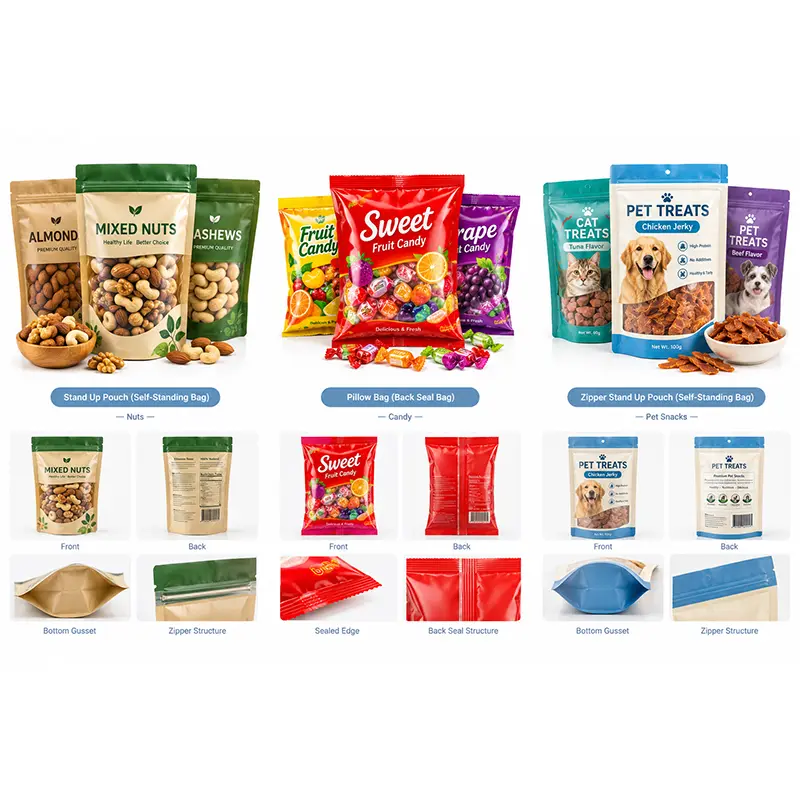 The best way to make the right decision is to start with your actual product, target weight, and desired package appearance.
6. Which Packaging Machine Do You Need?
Once you choose the bag style, the next step is selecting the right packaging machine.
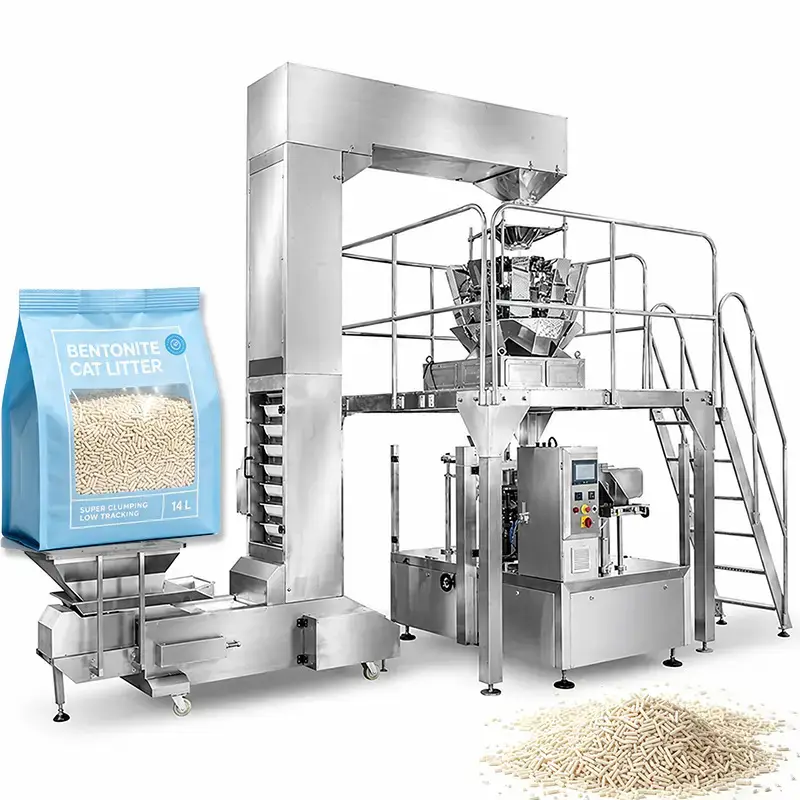
For Stand-Up Pouches: Premade Pouch Packing Machine
A premade pouch packing machine uses bags that have already been made.
Depending on the machine configuration, it can automatically feed the pouch, open it, fill it with the product, seal it, and discharge the finished package.
It can be used for suitable products such as nuts, candy, dried fruit, pet treats, and powders.
Some models support zipper pouches or other special pouch designs.
Product link: https://ft-packing.com/
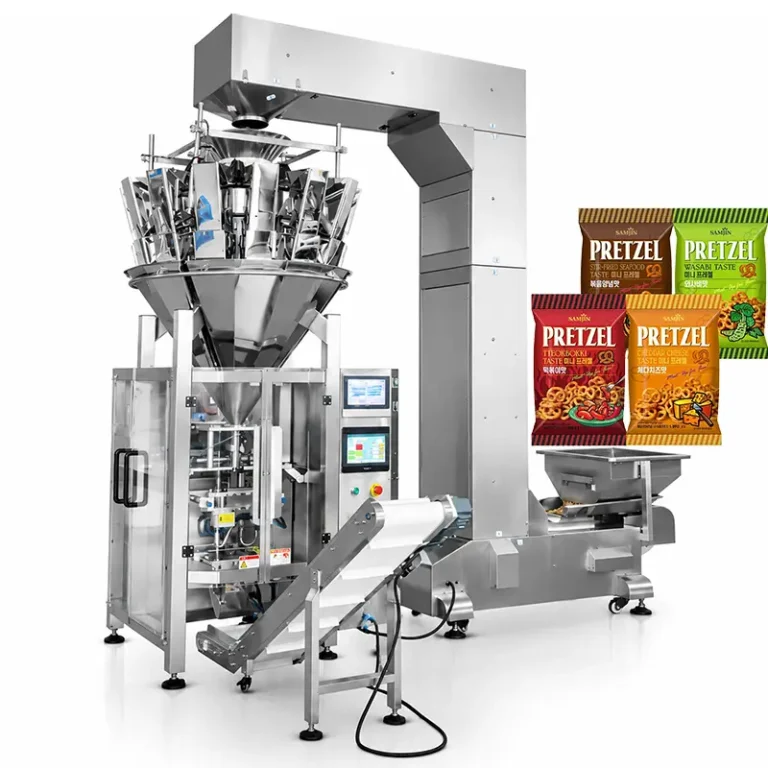
For Pillow Bags: Vertical Form Fill Seal (VFFS) Machine
A VFFS machine uses a roll of packaging film to make bags automatically.
The machine forms the film into a tube, fills the product, seals the bag, and cuts it to the required length.
Depending on the product, the line can be equipped with a multihead weigher, auger filler, or another suitable filling system.
It is widely used for suitable applications involving snacks, grains, candy, powders, and frozen foods.
Product link: https://ft-packing.com/
What Should You Tell the Machine Supplier?
Before asking for a quotation, prepare the following information:
- Product name and product photos.
- Target filling weight, such as 100 g, 250 g, or 500 g.
- Desired bag type and bag dimensions.
- Packaging material, if already selected.
- Required production speed.
- Any special requirements, such as a zipper, spout, or nitrogen flushing.
With this information, the supplier can better understand your needs and recommend a suitable machine configuration.
7. Watch the Packaging Machine in Action
Photos help you understand the machine's appearance, but a video can show you how the packaging process works.
For buyers comparing suppliers, a real production video can help answer practical questions:
- How does the machine feed the product?
- How does the bag open or form?
- How is the product filled?
- How does the machine seal the package?
- What does the finished bag look like?
Automatic Stand-Up Pouch Filling and Sealing Machine in Action
Automatic VFFS Packaging Machine Producing Pillow Bags
For the best experience, use your own machine videos showing real products and finished packages. This helps buyers understand the equipment more clearly before contacting your sales team.
8. Frequently Asked Questions
Is a stand-up pouch better than a pillow bag?
It depends on your needs. A stand-up pouch is a good option when upright shelf display or resealing is important. A pillow bag may be more suitable for standard roll-film packaging and many automatic production lines.
Which bag is cheaper?
There is no fixed answer. The total cost depends on the bag material, bag size, design, machine configuration, production speed, and other operating costs. Compare the actual cost per finished package before making a decision.
Can I use a stand-up pouch for powder?
Yes, if the pouch structure, material, and filling machine are suitable for the powder. An auger filler is commonly used for many powder applications.
How do I know which bag size is right?
Start with the target filling weight and product characteristics. Then confirm the required bag width, height or length, gusset, and sealing area. A packaging test with your actual product is the best way to confirm the final size.
What information do I need before buying a packaging machine?
Prepare your product details, filling weight, bag style, package dimensions, packaging material, and target output. If possible, provide product samples and packaging samples for testing.
Conclusion: Choose the Bag That Fits Your Product
Stand-up pouches and pillow bags both have their advantages.
A stand-up pouch may be the right choice if you want upright shelf display, flexible branding, or a resealable package. A pillow bag may be a better fit for many standard roll-film packaging applications.
The most important thing is to choose a package that fits your product and a machine that can produce it reliably.
At FRONTECH, we provide automatic packaging machines and customized packaging solutions for different products and packaging requirements.
Not sure which bag style is right for your product? Contact FRONTECH and tell us what you want to pack, the target weight, and your preferred bag style. Our team can help you explore a suitable packaging solution.
References
- Flexible Packaging Association. “Flexible Packaging Industry Resources.” flexpack.org
- Flexible Packaging Association. “Sustainability in Flexible Packaging.” flexpack.org
- U.S. Food and Drug Administration. “Food Packaging & Food Contact Substances.” fda.gov