







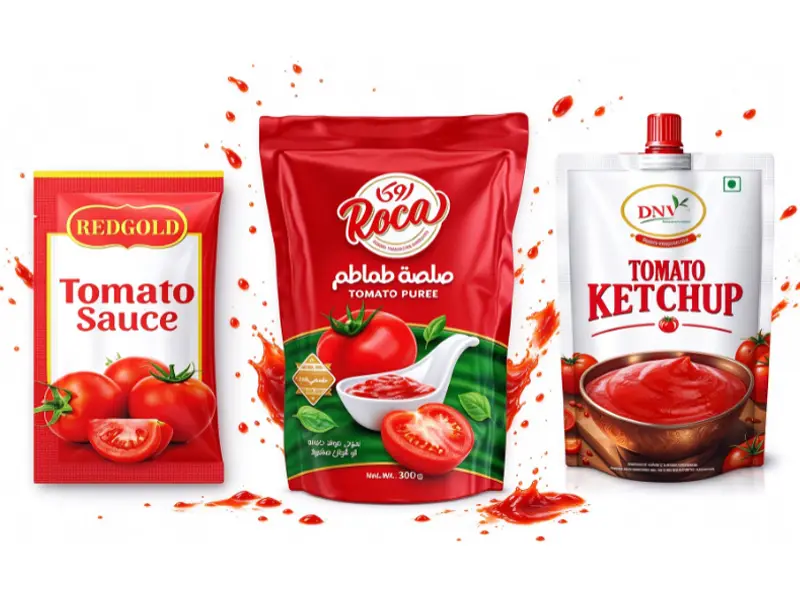
Choosing the right tomato sauce pouch size involves more than deciding how many grams to put in each bag. The package must suit the product, the intended customer, the packaging format and the production equipment.
A 10g ketchup sachet for a takeaway restaurant has very different requirements from a 500 g pouch for retail sales. The pouch dimensions, sealing area, filling system and required output can all affect the choice of packing machine.
This guide explains common tomato sauce pouch formats, provides practical size examples and shows what manufacturers should check before choosing a tomato sauce packing machine.
1. Tomato Sauce Pouch Sizes at a Glance
Tomato sauce and ketchup are sold in a wide range of pack sizes, from single-serving sachets to larger pouches for household and food-service use.
The table below provides examples to help you start planning. The dimensions are illustrative references, not universal standards. The final pouch size should be confirmed with the packaging supplier and tested with the actual product.
| Tomato sauce pack | Example fill quantity | Packaging format | Typical application |
| Small portion sachet | 10 g | Four-side-seal sachet | Fast food, takeaway and food service |
| Portion sachet | 20 g | Flat sachet | Restaurants, catering and individual portions |
| Medium pouch | 70-150 g | Sachet or flexible pouch | Portion packs and smaller retail packs |
| Retail pouch | 200-500 g | Pillow pouch or premade pouch | Household and retail sales |
| Large pouch | 500 g-1 kg or more | Larger premade pouch or other suitable bag format | Food service and bulk-use applications |
Pouch dimensions are not universal, and the same filling weight may require different bag sizes depending on the product and package design. Before finalizing the dimensions, confirm the pouch structure, sealing allowances and filling requirements with your packaging supplier. For general information on flexible packaging materials, the Flexible Packaging Association provides industry resources on flexible packaging and its applications.
2. Which Pouch Format Is Suitable for Tomato Sauce?
Different pouch formats serve different sales channels and production requirements.

Four-side-seal sachets
These are commonly used for single-serving ketchup and condiment packs. All four sides are sealed, creating a flat individual sachet. Multi-lane packaging machines can be considered when high output is required, depending on the sachet design and filling quantity.
Pillow pouches
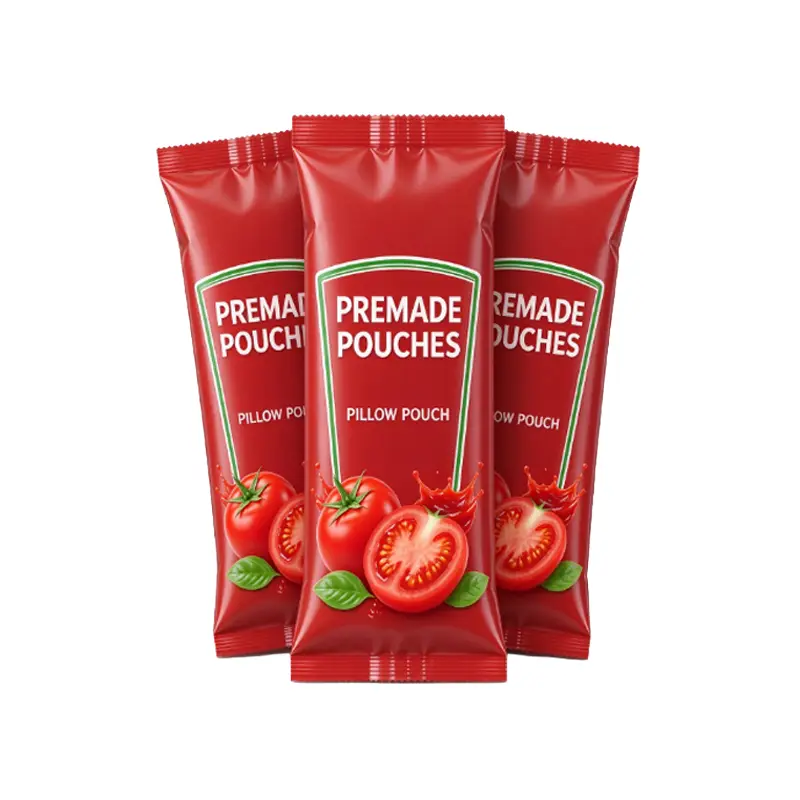
Pillow pouches are formed from a roll of packaging film. A vertical form-fill-seal machine forms the bag, fills it with sauce and seals it. This option is worth evaluating for flexible retail or food-service packs.
Premade pouches
Premade pouches are manufactured before they reach the packing machine. They can be flat pouches, stand-up pouches or other compatible designs. The machine configuration depends on pouch width, height, opening style and filling requirements.

Spouted pouches
Spouted pouches may suit products designed for controlled pouring or convenient dispensing. Confirm the spout and cap specifications, pouch structure and filling method before selecting the machine.
The packaging format should be decided before choosing the machine. A machine designed to form bags from roll film is not automatically suitable for premade pouches or spouted pouches.
3. How Does Pouch Size Affect Packing Machine Selection?
Pouch dimensions directly influence the machine's forming range, filling arrangement and production speed.
Bag width and length
For roll-film machines, the bag dimensions must be compatible with the forming tube, film width and sealing structure. For premade pouch machines, the pouch must fit the supported width and height range and be handled reliably by the feeding and opening mechanisms.
If you plan to pack multiple sizes, ask the supplier which dimensions the same machine can accommodate and whether additional change parts are required.
Filling quantity and product characteristics
A 10g sachet and a 500 g pouch do not necessarily require the same dosing arrangement. The filling system must suit the target quantity and the ketchup's flow characteristics.
For thick sauces, the dosing method and filling nozzle should be evaluated using the actual product. The supplier should also confirm the expected output at the required fill quantity.
Sealing area and headspace
The pouch needs enough room for filling without allowing the product to contaminate the sealing area. The sealing width and package structure should be included in the design.
If the pouch is too small for the intended fill quantity, it may be difficult to achieve the desired appearance and reliable sealing. Increasing pouch dimensions without considering the machine's supported range can also create equipment compatibility issues.
4. What Should You Check Before Finalizing Pouch Dimensions?
Before ordering printed film or premade pouches, confirm the following details.
| Item | What to confirm | Why it matters |
| Fill weight | Exact target quantity per pouch | Establishes the filling requirement |
| Pouch width and length | Finished bag dimensions | Determines machine compatibility |
| Pouch format | Four-side seal, pillow pouch, premade pouch or spouted pouch | Determines the machine type |
| Packaging material | Film structure, thickness and sealing characteristics | Affects forming and sealing performance |
| Product consistency | Viscosity and any particles, if present | Influences dosing and product cut-off |
| Target output | Packs per minute or hour | Helps determine the required machine capacity |
| Size changes | Number of pouch sizes and changeover expectations | Affects configuration and operating flexibility |
Do not finalize pouch dimensions from fill weight alone. If possible, test the actual ketchup in a sample pouch and check the filled appearance, remaining headspace and sealing performance.
For printed roll film, also confirm the film layout, registration marks and sealing allowances with the film supplier and machine manufacturer before production.
For food packaging, material selection should consider both machine performance and the intended food-contact application. The U.S. FDA's guidance on Food Contact Substances provides information on the regulatory framework for materials that come into contact with food. Always check the requirements that apply to your destination market and the specific packaging material.
5. Common Problems When Packing Tomato Sauce in Pouches
Even when the pouch dimensions appear correct, filling and sealing issues can affect the finished package.
| Problem | Possible cause | What to check |
| Pouch looks overfilled | Insufficient pouch capacity or unsuitable filled shape | Recheck dimensions and filling quantity |
| Sauce contaminates the seal | Dripping, splashing or unsuitable filling position | Check nozzle design, filling timing and cut-off |
| Pouches leak | Contaminated sealing area, unsuitable film or incorrect sealing conditions | Test material compatibility and sealing settings |
| Bag dimensions vary | Film tracking, forming or feeding issues | Check film alignment and machine settings |
| Actual speed is lower than expected | Larger pouches, longer filling cycles or frequent stops | Confirm sustained output using the target pouch |
The cause should be identified through testing rather than changing machine settings at random. For example, raising the sealing temperature will not necessarily solve a leak if sauce has already contaminated the seal area.
6. How to Choose the Right Tomato Sauce Packing Machine
The suitable machine depends on the combination of pouch format, dimensions, fill quantity and production target.
- For small sachets: Evaluate a sachet packing machine, including whether a multi-lane configuration is suitable for the required output.
Video :
- For premade pouches: Choose a machine compatible with the pouch dimensions and opening structure.
Video :
- For spouted pouches: Confirm compatibility with the spout, cap and required filling and closing operations.
Video :
Before comparing quotations, ask suppliers to confirm the supported pouch-size range, dosing method, expected production speed and required change parts.
7. What Information Should You Send to a Packing Machine Supplier?
To receive a more accurate recommendation, prepare a short project brief with:
Tomato sauce or ketchup product details, including its consistency.
Target filling weight for each pouch size.
Finished pouch dimensions or a pouch drawing.
Pouch format and packaging material.
Required production capacity.
Whether you need to pack one size or several sizes.
Photos or samples of the product and packaging, if available.
If the pouch has not been designed yet, explain the target fill weight and intended application. The supplier can then help assess the feasible pouch dimensions and machine range.
References
The following resources provide additional technical and regulatory information related to tomato sauce pouch packaging, food-contact materials, food hygiene, and flexible packaging.
U.S. Food and Drug Administration (FDA): Packaging and Food-Contact Substances. Information about the regulatory framework for materials that come into contact with food.
U.S. Food and Drug Administration (FDA): Understanding How FDA Regulates Food-Contact Substances. An overview of how FDA regulates substances used in food-contact applications.
Codex Alimentarius Commission (FAO/WHO): Codes of Practice. International food safety and hygiene guidance relevant to food production and handling.
Flexible Packaging Association (FPA): Flexible Packaging Association. Industry resources about flexible packaging materials, applications, and packaging solutions.